


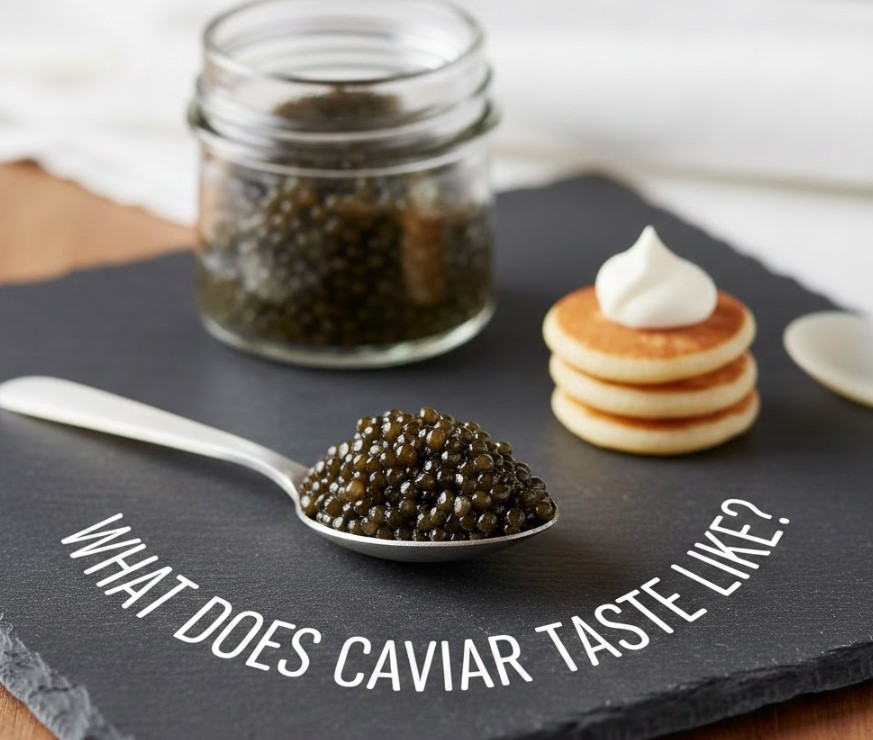
Caviar, often referred to as “food fit for royalty,” has long been admired for its luxurious appeal and unique flavor. Whether you’re planning to try it for the first time or have already experienced this delicacy, you might find yourself wondering: What does caviar taste like?
In this article, we will explore caviar in detail, explaining its flavor profile, texture, and how it compares to other luxury foods. Additionally, we’ll cover its health benefits and why it has earned its reputation as an expensive treat. So, let’s dive into the fascinating world of caviar and uncover all the details that make it so highly sought after.
Also Read: Gonzay com Latest Fashion Trends: Discover the Best Styles
What Does Caviar Taste Like? The Flavor Profile of This Luxurious Treat
Caviar comes from the eggs of sturgeon, a type of fish that’s primarily found in the Caspian Sea, the Black Sea, and other parts of Europe and Asia. The eggs are carefully harvested, processed, and salted to create the final product. But what does caviar actually taste like?
The Salty, Briny Flavor of Caviar
The most obvious taste in caviar is its saltiness, which is a result of the preservation process. The eggs are salted to enhance their flavor and prolong their shelf life. However, caviar’s taste is much more nuanced than simply being salty.
Fresh caviar often has a slight briny or seafood-like flavor, but it’s balanced by an earthy or buttery undertone. Depending on the type of caviar, you may also detect hints of nutty, smoky, or fruity flavors. For example, Osetra caviar tends to have a mild nutty flavor, while Beluga caviar is known for its more delicate, creamy taste.
How Does Caviar Taste to Eat?
When you take a bite of caviar, the experience is often described as luxurious and delicate. The eggs “pop” in your mouth, releasing their briny, savory flavor. Some people compare it to the sensation of eating a burst of the ocean, while others liken it to the taste of butter or cream with a salty twist.
The texture and flavor of caviar can vary greatly based on the type of sturgeon it comes from, the quality of the eggs, and how it’s prepared. Fresh caviar tends to have a cleaner taste, while aged caviar might have a more intense flavor.
Also Read: What is ButrflySkullMama? Meaning, Origin, and Why It Resonates
What Does Caviar Taste Like: Comparison to Other Delicacies
Caviar is often compared to other high-end foods like foie gras, truffles, and lobster. But how does it stack up when it comes to taste and texture?
Caviar vs. Foie Gras: Richness and Flavor Intensity
Both caviar and foie gras are considered luxurious treats, but they differ significantly in taste. Foie gras has a rich, buttery flavor with a smooth texture, whereas caviar offers a more subtle, briny taste. While foie gras is known for its savory richness, caviar is lighter and often enjoyed as an appetizer or garnish.
Caviar vs. Truffles: Earthiness vs. Briny Notes
Truffles and caviar both carry a distinct earthiness, but they manifest in different ways. Truffles have a deep, musky, and woody flavor, whereas caviar provides a delicate balance of saltiness with a hint of sea freshness. Truffles are often used to enhance the flavor of dishes, while caviar stands as the main attraction, particularly in gourmet meals.
Caviar vs. Lobster: Seafood in Different Forms
Both lobster and caviar come from the sea, but their flavors couldn’t be more different. Lobster has a sweet, tender, and slightly rich flavor, while caviar’s taste is more briny and savory. Lobster is often enjoyed as the centerpiece of a dish, while caviar is typically a garnish or appetizer, celebrated for its light, poppy texture.
Expensive Caviar: Why Does It Taste So Special?
The price of caviar is a significant factor in what makes it unique. So, why is caviar so expensive, and does the price reflect its taste?
The Rarity and Labor-Intensive Harvesting Process
The primary reason for caviar’s hefty price tag is its rarity and the time-consuming harvesting process. Sturgeon can take up to 15 years to reach maturity, and not all fish produce high-quality eggs. The eggs must be harvested by hand, a delicate process requiring skill and expertise.
Additionally, some types of caviar, like Beluga caviar, are particularly rare due to overfishing concerns and strict regulations. The combination of scarcity, labor, and expertise in harvesting elevates the price, making it one of the most expensive foods in the world.
What Does Caviar Taste Like: Texture and Mouthfeel
Caviar’s texture is one of the most distinguishing features of the delicacy. When you eat caviar, the eggs are tiny and delicate, providing a soft yet firm texture. They pop in your mouth, releasing their briny essence, and their smoothness is often described as creamy. The texture is also what makes caviar unique when compared to other luxury foods like foie gras or truffles.
The eggs themselves are smooth, but their outer membrane is just firm enough to create a satisfying burst when bitten into. This combination of texture and flavor is part of what makes caviar such an indulgent experience.
Also Read: What is Miuzo? Exploring Innovation & Creativity in Digital Spaces
What Does Caviar Taste Like on the Palate?
When consumed properly, caviar should be enjoyed in small portions, often with accompaniments like blinis, crème fraîche, or chopped eggs. The idea is to let the delicate flavors and textures of the caviar shine through without overwhelming your palate. The experience should be one of refined indulgence, where the salty and creamy notes dance on your tongue.
Health Benefits: What Does Caviar Taste Like and How It’s Good for You
While caviar is often seen as a luxurious indulgence, it also boasts several health benefits that may surprise you. Here’s how this extravagant food can be beneficial to your health:
Rich in Omega-3 Fatty Acids
Caviar is an excellent source of omega-3 fatty acids, which are essential for heart health. These healthy fats can help reduce inflammation, lower blood pressure, and promote good cholesterol levels. Eating caviar in moderation can provide a heart-healthy boost to your diet.
High in Protein and Nutrients
Caviar is packed with protein and important vitamins and minerals, including vitamin B12, iron, selenium, and magnesium. These nutrients are essential for maintaining energy levels, boosting immunity, and promoting overall well-being.
Potential Benefits for Skin and Hair
Caviar’s rich omega-3 content and vitamin-rich profile may also benefit your skin and hair. The healthy fats in caviar can help maintain skin hydration and improve elasticity. Additionally, caviar is sometimes included in luxury skincare products due to its potential to nourish and repair skin.
Also Read: aelftech com corporate office plans: Optimizing Business Spaces
Conclusion: What Does Caviar Taste Like?
Caviar’s taste is complex, ranging from salty and briny to earthy and buttery, depending on the type. Its texture is equally unique, with eggs that burst in your mouth and offer a creamy yet firm feel. Whether you’re tasting Osetra, Beluga, or Sevruga, each variety has its own distinct flavor profile, making caviar a delightful and indulgent experience.
Beyond its exquisite taste and texture, caviar also offers health benefits that are worth considering. It’s rich in omega-3 fatty acids, protein, and essential vitamins, making it a nutritious luxury food. However, its expensive price tag is due to its rarity and the labor-intensive harvesting process, making it a special treat for those who can afford it.
So, the next time you wonder, “What does caviar taste like?” remember that it’s more than just a salty snack – it’s a unique culinary experience with a complex flavor, texture, and a rich history.
Frequently Asked Questions
1. What does caviar taste like on the palate?
Caviar has a complex taste with salty, briny, and earthy notes. The texture is smooth, and the eggs burst in your mouth, releasing their delicate flavors.
2. Why is caviar so expensive?
Caviar is expensive due to the rarity of sturgeon, the labor-intensive harvesting process, and the strict regulations surrounding its production. Some types of caviar, like Beluga, are particularly rare, adding to their cost.
3. What are the health benefits of caviar?
Caviar is rich in omega-3 fatty acids, protein, and essential vitamins, providing benefits for heart health, skin, and hair.
4. How does caviar compare to other luxury foods?
Caviar is lighter and more briny than other luxury foods like foie gras and truffles. While foie gras is rich and creamy, caviar is more delicate and savory, often served as an appetizer or garnish.
5. What types of caviar taste best?
The taste of caviar depends on the type. Beluga is known for its delicate, creamy flavor, while Osetra is more nutty, and Sevruga is typically saltier. Each type offers a unique tasting experience.
For more update visit dailycaller.co.uk
