


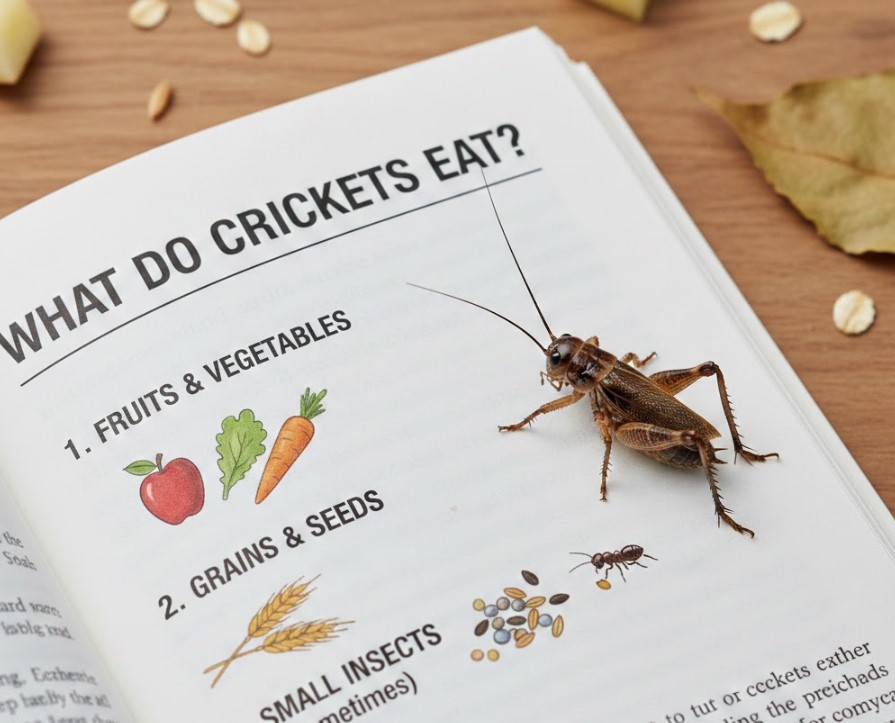
Crickets are fascinating creatures, known for their distinctive chirping sound and diverse habitats. Whether you’re an insect enthusiast, a pet owner, or simply curious about the tiny critters hopping around your yard, understanding what crickets eat is essential. Their diet varies depending on their environment, and knowing what crickets eat in different settings can provide insight into their behavior, survival strategies, and how to care for them.
In this comprehensive guide, we will answer all the burning questions about cricket diets, from their natural food sources to what they need to thrive in captivity. So, let’s dive in and explore what crickets eat in various settings.
What Do Crickets Eat? A General Overview
Crickets are omnivores, meaning they consume both plant and animal matter. Their diet largely depends on their environment, available food sources, and their specific species. In the wild, crickets are opportunistic feeders, meaning they will eat whatever is accessible to them.
What Do Crickets Eat in the House?
When crickets invade your home, they are typically drawn to food sources like crumbs, spilled pet food, and decaying organic matter. In houses, crickets primarily feed on:
- Food scraps: Crickets will nibble on leftover food, including grains, bread, fruits, and vegetables.
- Fabric and paper: In the absence of food, some crickets may chew on fabric, paper, and cardboard. This behavior is often mistaken for destructive pests, but it’s usually due to a lack of food.
- Moisture: Crickets need moisture to survive, so they may be attracted to damp areas, including basements and bathrooms.
Although they aren’t directly harmful to humans, they can cause frustration when their chirping becomes too loud or they consume your pantry supplies.
What Do Crickets Eat in the Wild?
In the wild, crickets are generally found in grassy areas, forests, and meadows, where they can find a wide range of food. Their diet is more varied, and they are opportunistic feeders, meaning they will eat whatever is available in their environment. Common food sources for wild crickets include:
- Grass: Many wild crickets, particularly those in grassy fields, feed on fresh grass and leaves.
- Decaying plant matter: Fallen leaves, dead plants, and decomposing organic material are a rich source of nutrition for crickets.
- Seeds and fruits: Wild crickets enjoy seeds, berries, and fallen fruits that they come across in their environment.
- Small insects and dead animals: Some species of crickets, like the house cricket, may also scavenge on small insects or the carcasses of dead animals.
What Do Crickets Eat and Drink?
While crickets primarily feed on plant-based material, they also require hydration to stay alive. In addition to food, crickets need access to water, and their diet includes:
- Water: Crickets drink water from sources like puddles, dew, or even the moisture in food. They require a constant source of moisture to maintain hydration, especially in dry conditions.
- Juicy fruits and vegetables: Moist fruits, such as apples, oranges, and cucumbers, are not only a food source but also provide hydration to crickets.
In captivity, pet owners must ensure that their crickets have access to water, either in a shallow dish or through water-soaked food.
Also Read: GLP-1 Patch: Benefits, Side Effects, and How It Works
What Do Crickets Eat in Captivity?
Crickets kept as pets or as feeders for reptiles and other animals have a diet tailored to their captivity needs. Proper nutrition is essential for their health and for ensuring that they provide a nutritious meal for pets like lizards and frogs.
In captivity, crickets are typically fed:
- Commercial cricket food: Specialized food blends designed for crickets, available at pet stores, provide the necessary nutrients.
- Fruits and vegetables: Like in the wild, crickets benefit from fruits such as apples, oranges, and bananas, and vegetables like carrots and leafy greens.
- Grains and cereals: Crickets are often fed dry grains such as oats, cornmeal, and wheat bran. These foods are easy to store and provide a good source of nutrition.
- Water: A shallow dish of water is essential for crickets in captivity to stay hydrated.
If you’re keeping crickets as pets or feeders, it’s important to provide a balanced diet to ensure their health and proper nutrition.
What Do Crickets Eat to Stay Alive?
Crickets, like all creatures, need a variety of nutrients to survive. In general, crickets require a balanced diet of protein, carbohydrates, and water to stay alive. Their diet includes:
- Proteins: In the wild, crickets may consume small insects or scavenged dead animals, providing the protein they need for growth and reproduction.
- Carbohydrates: Grasses, seeds, and fruits provide carbohydrates, which are necessary for energy.
- Water: Hydration is essential. Crickets need water to digest food properly and maintain bodily functions.
In captivity, if crickets are fed a poor diet or deprived of water, they may die quickly. A balanced diet, including a mix of fresh produce, protein, and water, is essential to keep them healthy.
Also Read: What is Liopad? The Rise of a Digital Identity
What Do Crickets Eat in the Rainforest?
Crickets in the rainforest face a unique set of food sources due to the dense vegetation and humid environment. In the wild, rainforest crickets feed on:
- Leaf litter and decaying plants: Rainforest crickets feed on decomposing plant matter found on the forest floor.
- Fruits and fungi: The dense canopy of the rainforest provides various fruits and mushrooms that crickets will feed on.
- Small insects: Some rainforest crickets are omnivorous and will hunt and scavenge on smaller insects and animal matter.
The humid environment of the rainforest also means that crickets get moisture from the air, as well as the moisture present in the fruits and plants they eat.
What Do Crickets Eat in the Garden?
In your garden, crickets can be beneficial as they help decompose organic matter, but they can also cause damage to your plants. Garden crickets typically feed on:
- Grass and plants: Just like their wild cousins, garden crickets consume a variety of grasses, leaves, and young plants.
- Decomposing organic matter: Garden crickets, like other crickets, will also feed on decaying plant material, helping break it down and return nutrients to the soil.
- Fruit and vegetables: If fruits and vegetables are left in the garden, crickets will often nibble on them, especially overripe fruits.
While they may cause some damage to your crops, crickets in the garden are largely beneficial to the ecosystem by aiding in decomposition.
Also Read: Glasgow Water Main Break Shettleston Road – Cause & Impact
What Do Crickets Eat in the Desert?
Desert crickets live in some of the harshest environments on Earth. As a result, their diet is adapted to the dry and often barren landscape. In the desert, crickets feed on:
- Cacti and desert plants: Some desert crickets feed on the leaves, flowers, and fruits of desert plants like cacti and shrubs.
- Decomposing organic material: Like other crickets, desert crickets feed on decaying plant matter and small animals they come across.
- Seeds and small insects: Desert crickets will consume seeds and insects that are available, which helps them maintain their energy in an environment with scarce food.
The ability of desert crickets to thrive on minimal water and survive in extreme heat is an impressive survival tactic, and their diet reflects the scarcity of resources in the desert.
Conclusion
Crickets are adaptable creatures with diverse diets that vary based on their environment. Whether they’re hopping around in your home, thriving in the wild, or living in captivity, crickets need a balance of food and water to survive. By understanding what crickets eat in different habitats, you can better appreciate these fascinating insects and provide them with the care they need if you keep them as pets or use them as feeders.
FAQs
1. What is the best food for crickets in captivity? A well-rounded diet including fruits, vegetables, grains, and protein is ideal for crickets in captivity. Commercial cricket food is also a good option.
2. Do crickets eat other insects? Yes, crickets are omnivores and will sometimes feed on smaller insects and decomposing animal matter, particularly in the wild.
3. Can crickets live without water? No, crickets need access to water to stay hydrated and survive, especially in captivity where moisture levels can be low.
For more update visit dailycaller.co.uk
