


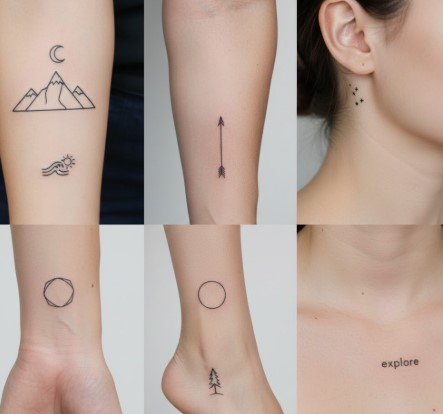
A Minimalist Tattoo is one of the most popular styles in today’s body-art culture, admired for its simplicity, clean lines, and powerful symbolism. Many people choose minimalist designs because they communicate deep meaning without needing complex imagery. Whether subtle or striking, minimalist tattoos offer a timeless look that appeals to both first-time tattoo clients and long-time enthusiasts.
Background & Origins of Minimalist Tattoo Style
The Minimalist Tattoo style draws inspiration from the minimalist art movement that emerged in the mid-20th century. Minimalism celebrated the idea of “less is more,” reducing artwork to its most essential elements. Tattoo artists later embraced these ideas, creating designs centered on lines, shapes, balance, and negative space.
As tattoo culture expanded worldwide, the minimalist style filled a gap for people wanting meaningful tattoos without heavy shading or large-scale coverage. It quickly became known as an elegant and universal form of self-expression.
History & “Age” of Minimalist Tattoo Culture
Although tattoos have existed for thousands of years, the Minimalist Tattoo gained popularity more recently.
Early 2000s: Artists began exploring fine-line and micro-tattoo techniques.
2010s: Social media platforms helped minimalist designs go viral, making them a global trend.
2020s onward: Minimalist tattoos became one of the most requested styles in tattoo studios around the world.
Their evolution shows a shift toward subtlety, symbolism, and wearable designs suitable for all lifestyles.
Physical Appearance & Design Traits of Minimalist Tattoos
The physical appearance of a Minimalist Tattoo is defined by clarity and simplicity. Common design traits include:
- Thin, delicate lines
- Micro-sizing or small designs
- Symmetry and geometric precision
- Icons, symbols, and simple shapes
- Minimal shading, often none at all
- Clean negative space to enhance contrast
These traits create tattoos that look elegant and timeless on any skin tone or body placement.
Also Read This:- The Ultimate Guide to Choosing a 3 Carat Diamond Ring
Symbolism & Meaning Behind Minimalist Tattoos
Although simple in form, a Minimalist Tattoo often carries deep meaning. People choose minimalist designs because:
- A single line can represent a lifetime journey
- A small heart can symbolize deep love
- A star can symbolize hope or achievement
- An abstract shape may reflect balance or personal growth
- Letters or initials represent loved ones or key memories
The beauty of minimalist tattoos lies in their ability to convey powerful messages through subtle forms.
Common Types of Minimalist Tattoos
Minimalist tattoos come in many creative forms. Popular categories include:
- Line-art tattoos – continuous or broken lines creating shapes or silhouettes
- Geometric shapes – triangles, circles, squares, sacred geometry
- Icon tattoos – tiny hearts, moons, stars, waves, arrows
- Floral minimalist tattoos – tiny roses, daisies, leaves
- Micro symbols – zodiac signs, initials, coordinates
- Abstract designs – symbolic shapes, concept-based forms
These options make minimalist tattoos versatile for every personality and aesthetic preference.
Relationship With Personal Identity & Expression
For many individuals, a Minimalist Tattoo is a deeply personal symbol of identity. This style allows people to express:
- Memories
- Personal growth
- Emotional experiences
- Spiritual beliefs
- Cultural background
- Artistic taste
Minimalist tattoos are regularly chosen for their ability to communicate emotion without overpowering the body’s natural appearance. They balance self-expression with subtle elegance.
Also Read This:- A Comprehensive Guide to Choosing the Best Volleyball Shoes
Relationship With Tattoo Artists & Modern Trends
Tattoo artists play a major role in shaping the Minimalist Tattoo movement. As fine-line techniques advanced, artists began creating more precise and delicate designs.
Modern trends include:
- ultra-thin line designs
- micro-sized tattoos
- abstract minimal forms
- symbolic imagery with cultural meaning
- fine art–inspired tattoos
Artists often bring unique interpretations, merging minimalism with realism, geometry, or abstraction.
Placement Ideas for Minimalist Tattoos
One of the strengths of the Minimalist Tattoo style is its flexibility in placement. Common areas include:
- Wrist and forearm
- Collarbone
- Finger or top of hand
- Back of the arm
- Behind the ear
- Ankle or foot
- Ribcage or hip
Minimalist tattoos sit beautifully in both visible and hidden areas, depending on the wearer’s preference.
Minimalist Tattoo Techniques & Tools
A professional Minimalist Tattoo requires precise tools and techniques. Artists typically use:
- Single-needle machines for ultra-fine lines
- Slow, controlled movements to maintain line consistency
- Minimal shading needles
- Light machine pressure to avoid blown-out lines
These specialized methods help achieve the signature clean, delicate appearance of minimalist designs.
Pain Level & Aftercare for Minimalist Tattoos
Minimalist tattoos generally involve mild to moderate discomfort because they focus on fine lines instead of heavy shading. Pain level depends on placement and personal sensitivity.
Aftercare is simple:
- Keep the area clean
- Avoid sun exposure
- Apply recommended moisturizer
- Allow natural healing
- Avoid scratching or peeling
Minimalist tattoos may fade more quickly due to their fine lines, so they sometimes require touch-ups.
Advantages & Challenges of Minimalist Tattoos
A Minimalist Tattoo offers many advantages:
- Elegant and subtle look
- Lower pain level due to minimal shading
- Quick application
- Easy to match with future tattoos
- Timeless aesthetic
However, there are challenges:
- Thin lines may fade faster
- Certain placements blur more easily
- Requires experienced artists for best results
- Mistakes are more noticeable due to simplicity
Understanding both sides helps clients make confident tattoo decisions.
Future Trends in Minimalist Tattoo Art
The future of the Minimalist Tattoo style includes:
- Micro-realism blending minimalism with tiny details
- Digital linework inspired by icons and UI symbols
- Abstract symbolic forms representing emotions or personal stories
- Ultra-fine lines using advanced machines
- Minimalist watercolor accents with soft hues
These trends continue to push the art form forward while maintaining its minimalist essence.
Conclusion
A Minimalist Tattoo represents a powerful modern movement in body art—one defined by simplicity, emotional depth, and visual elegance. Its clean lines, thoughtful symbolism, and universal appeal make it suitable for anyone seeking a meaningful yet understated tattoo. As techniques evolve and new styles emerge, minimalist tattoos will continue influencing global tattoo culture for years to come.
FAQs About Minimalist Tattoo
What is a minimalist tattoo?
A minimalist tattoo is a simple, fine-line design that focuses on clean shapes, symbols, and subtle imagery.
Are minimalist tattoos long-lasting?
They last well when properly cared for, but thin lines may fade more quickly than bold tattoos.
Do minimalist tattoos hurt less?
Often yes, because they use fine lines instead of large shading areas.
What are popular minimalist tattoo ideas?
Hearts, stars, waves, initials, geometric shapes, and simple line-art drawings.
Where is the best place to get a minimalist tattoo?
Wrist, collarbone, ankle, finger, behind the ear, or forearm.
What tools do artists use for minimalist tattoos?
Single-needle machines and fine-line equipment for precise detail.
Why choose a minimalist tattoo?
They are meaningful, elegant, subtle, and perfect for first-time tattoo clients.
Are minimalist tattoos expensive?
Price depends on the artist, size, and location, but they are often more affordable than larger tattoos.
Do minimalist tattoos fade quickly?
Fine lines may fade faster, especially in high-friction or sun-exposed areas.
Can minimalist tattoos be combined with other styles?
Yes, they blend well with geometric, abstract, or small realistic elements.
For More Information: DailyCaller
