


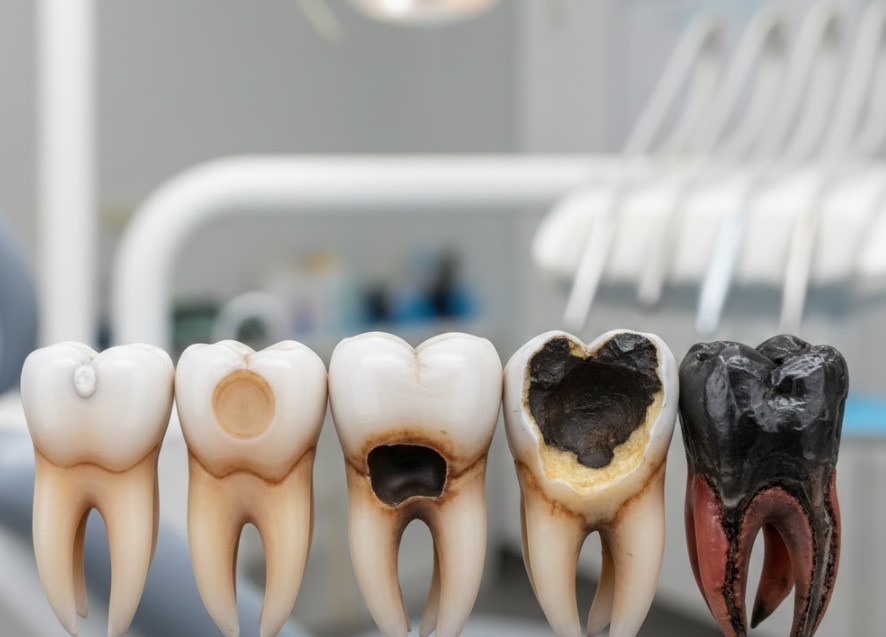
Cavities are small holes that form in your teeth due to tooth decay. This decay is caused by the buildup of plaque, bacteria, and acids that slowly eat away at the enamel. Early detection of cavities can save you from painful procedures and extensive dental work. But how can you spot cavities before they get worse? What do cavities look like?
Cavities appear differently at various stages and can vary depending on the type of tooth and age of the person. Whether you’re concerned about a toddler’s teeth, molars, or even your own front teeth, understanding what cavities look like is the first step to better oral health.
Also Read: Stelo CGM System Insights: Improving Diabetes Care with Real-Time Data
What Do Cavities Look Like on Teeth?
When you look in the mirror or check your child’s mouth, cavities can manifest in different ways. At their early stages, they may be nearly invisible. However, as they progress, they become more noticeable. What do cavities look like on teeth?
- Small Cavities: Initially, cavities often appear as white spots on the enamel. This is caused by demineralization, where minerals are lost due to bacteria.
- Medium Cavities: As cavities grow, they become darker, with brown or black discoloration.
- Severe Cavities: If left untreated, cavities can become deep, creating visible holes in the teeth, sometimes causing pain and sensitivity.
It’s crucial to examine your teeth regularly for any changes. Discoloration, especially in areas where food tends to get stuck, can indicate the beginning of tooth decay.
What Do Cavities Look Like on an X-ray?
One of the most effective ways for dentists to diagnose cavities is through X-rays. What do cavities look like on an X-ray? X-rays help detect cavities that are not visible to the naked eye, especially those located between the teeth or underneath existing fillings.
- Early Cavities on X-rays: In the initial stages, cavities appear as small, dark spots between teeth. These dark areas indicate the loss of enamel and the progression of decay.
- Advanced Cavities on X-rays: As the cavity progresses, it will show up as larger dark spots, extending deeper into the tooth structure, affecting the dentin layer or even the pulp.
An X-ray provides a clear view of cavities that may otherwise go unnoticed during routine dental checkups, making it an invaluable tool for early detection.
Also Read: Bulk Apothecary: Top Ingredients, Pricing & Buying
First Stage: What Do Cavities Look Like?
What do cavities look like in the first stage? The first stage of a cavity is often subtle and may not cause any pain or discomfort. Here’s what you might see:
- White Spots: These are the earliest signs of tooth decay, where minerals are lost from the enamel. These spots typically appear around the gum line or between teeth.
- No Pain or Sensitivity: Early-stage cavities usually don’t cause pain, which is why they are often overlooked.
At this stage, cavities can often be reversed if treated with fluoride and proper oral hygiene, which can remineralize the enamel before it turns into a full-blown cavity.
What Do Cavities Look Like on Baby Teeth?
What do cavities look like on baby teeth? Baby teeth are more prone to cavities due to their softer enamel. Cavities in baby teeth can develop quickly and lead to early dental problems if not addressed.
- Small White or Brown Spots: Like adult teeth, cavities in baby teeth start as white or brown spots on the enamel.
- Rapid Progression: Since baby teeth have thinner enamel, cavities can spread faster, creating larger holes or decay.
Parents should check their child’s teeth regularly for any changes and schedule dental checkups to catch cavities early.
What Do Cavities Look Like on Front Teeth?
What do cavities look like on front teeth? Cavities on front teeth can be particularly concerning, as they affect appearance and can impact speech and eating habits.
- Visible White or Brown Spots: Cavities on front teeth often start as small white spots near the gum line or along the sides of the teeth.
- Discoloration: As the cavity progresses, it can turn brown or black, making it more noticeable.
Front teeth cavities can be harder to spot early on, especially if they occur between the teeth. Regular dental visits and at-home checks can help you catch these cavities before they worsen.
What Do Cavities Look Like on Molars?
Molars are particularly vulnerable to cavities because of their rough surfaces and deep grooves. What do cavities look like on molars?
- Pit and Fissure Cavities: The deep grooves on molars are ideal spots for food and bacteria to hide. Cavities in these areas typically appear as small dark spots or holes.
- Brown or Black Discoloration: Over time, cavities on molars will often turn brown or black and may even create a visible hole in the tooth.
Molars are often the first place cavities develop, so be sure to clean these areas thoroughly, using floss and brushing with fluoride toothpaste.
Also Read: Twastia com Health: Everything You Need to Know
What Do Cavities Look Like in the Beginning?
What do cavities look like in the beginning? In the beginning, cavities are small and often painless. Here’s what to look for:
- White Spots on Teeth: These are the earliest signs of decay. They usually appear on the surface of the tooth and are a result of demineralization.
- No Visible Hole: At this stage, cavities have not yet created holes in the tooth, so there is no pain or sensitivity.
If you catch cavities at this early stage, it’s possible to prevent further decay with good oral hygiene practices and fluoride treatment.
What Do Cavities Look Like in Toddlers?
What do cavities look like in toddlers? Cavities in toddlers can be tricky because they may not always show obvious signs, and toddlers are not always cooperative during dental checkups. What do cavities look like in toddlers?
- Discoloration: In the early stages, cavities may appear as white spots or brown discoloration, especially near the gum line.
- Pain or Sensitivity: As the cavity progresses, toddlers may begin to experience pain, especially when eating sweet or cold foods.
- Visible Holes: In more advanced stages, cavities can create visible holes in the teeth, which may cause difficulty eating or speaking.
Regular dental visits and proper oral hygiene are essential to prevent cavities in toddlers.
Also Read: Bulk Supplements Creatine: Benefits, Usage, and Fitness Results
Conclusion
Understanding what do cavities look like is key to preventing tooth decay and maintaining good oral health. Early detection of cavities, whether visible on teeth or on an X-ray, can save you from painful procedures down the line. Regular checkups and vigilant home care are crucial, especially for toddlers, baby teeth, molars, and front teeth. Remember, cavities in their early stages are treatable and can often be reversed with fluoride treatments, making timely intervention a key factor in preventing tooth damage.
FAQs
1. Can cavities go away on their own?
No, cavities do not heal on their own. Early-stage cavities can be remineralized with fluoride, but once a cavity has formed, it requires professional treatment to prevent further decay.
2. How do cavities form?
Cavities form when bacteria in your mouth feed on sugars from food, producing acids that erode the enamel of your teeth. This process leads to demineralization and the formation of holes.
3. What can I do to prevent cavities?
Good oral hygiene, including brushing twice a day, flossing, and visiting the dentist regularly, is essential in preventing cavities. Avoiding sugary snacks and drinks can also help protect your teeth.
4. Are cavities more common in children?
Yes, children are more prone to cavities due to their softer enamel, poor brushing habits, and high sugar intake. Early dental visits are essential to prevent long-term issues.
For more update visit dailycaller.co.uk
