


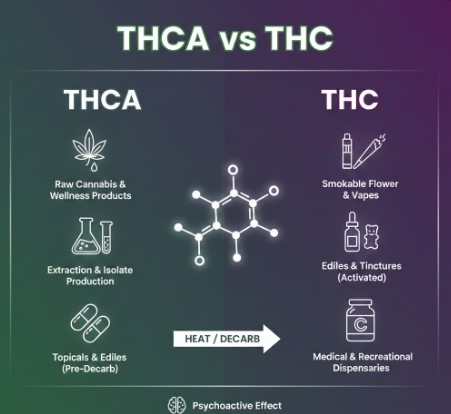
The world of cannabinoids can feel complex, especially when comparing thca vs thc, two closely related compounds that play very different roles in the cannabis plant. While they share a chemical connection, their effects, behavior, and uses differ significantly. Understanding these differences is essential for anyone seeking clarity about how cannabinoids interact with heat, the plant itself, and the human experience.
Origin Story of THCA and THC
The story of thca vs thc begins within the cannabis plant itself. THCA is the natural, raw form of THC. It forms inside the plant’s trichomes—those tiny crystal-like structure that appear on flowers and leaves. As the plant grows, THCA develops through natural biosynthesis, shaped by enzymes that guide cannabinoid production.
THC does not initially exist in freshly harvested cannabis. Instead, it forms when THCA undergoes decarboxylation, a process triggered by heat or long-term aging. This transformation removes a carboxyl group from THCA and converts it into THC. This simple chemical shift produces a dramatic difference in its effects.
In this way, THCA is like the “youth” of the molecule—full of potential—while THC is its matured, activated version.
Also Read This:- How Health Improves After Successful Colorectal Cancer Surgery
The ‘Age’ of thca vs thc
From a scientific standpoint, thca vs thc has a timeline that spans decades of research. THCA was identified and studied as cannabis science evolved in the mid-20th century. THC, however, gained significant attention earlier due to its recognizable effects and cultural relevance.
As cannabis research expanded, scientists gained a deeper understanding of how THCA converts into THC and how each compound behaves inside and outside the plant. Modern studies continue to uncover more about these cannabinoids, especially as interest in non-intoxicating compounds grows.
Today, the “age” of both molecules continues to evolve as more discoveries reveal their potential roles in the cannabis ecosystem.
Physical Appearance: The Look & Feel of THCA vs THC
If one were to imagine thca vs thc visually, their physical appearances highlight unique characteristics. THCA often appears in raw cannabis as a crystalline structure within the trichomes. It maintains a natural, plant-fresh form and is sensitive to heat, meaning it begins to change when exposed to warmth or sunlight.
THC, by comparison, is the activated form. It works more closely with terpenes—aromatic compounds—to shape scent and flavor. In extracts, THC may appear as an amber, golden, or translucent oil depending on how it is processed. While THCA represents the raw essence of the plant, THC embodies the finished expression that emerges through heat.
Core Personality & Traits of THCA
In a biography-style sense, THCA has a gentle, grounded personality. It remains calm, non-intoxicating, and close to its natural state. Its traits include:
• raw purity
• non-intoxicating nature
• sensitivity to heat
• plant-fresh qualities
• connection to the living cannabis plant
These characteristics make THCA unique because it reflects the plant before any activation or transformation occurs.
Core Personality & Traits of THC
THC can be thought of as the activated, expressive version of the molecule. When heat enters the picture, THC emerges with traits that are shaped by this transformation:
• potency
• activation through heat
• psychoactive effects
• strong aromatic interaction with terpenes
• enhanced presence in heated cannabis products
Compared to THCA’s calmer persona, THC is more dynamic and dominant within the experience associated with heated cannabis.
Mission & Values Behind thca vs thc
When comparing thca vs thc, their “missions” symbolize different aspects of cannabis. THCA represents potential—what the plant is before heat changes its chemistry. Its values include natural purity and unaltered botanical form.
THC represents expression and activation. It symbolizes the part of cannabis that interacts with heat, unlocking effects that have shaped culture, science, and consumer interest.
Together, THCA and THC reflect a dual philosophy: one rooted in raw nature and the other in transformed experience.
Major Relationships & Ecosystem Connections
In the cannabis ecosystem, thca vs thc maintain relationships with heat, time, light, terpenes, and other cannabinoids. THCA’s strongest connection is with temperature; even slight warmth shifts it toward THC. It also interacts with drying and curing processes.
THC connects with extraction methods, vaporization, edibles, and combustion. It works harmoniously with terpenes to create flavor and aroma profiles.
Both molecules interact with the plant’s broader cannabinoid family, forming a complex network that influences overall characteristics.
Friends & Rivals in the Cannabis Industry
In this narrative, THCA and THC have “friends”—other cannabinoids that complement their traits. CBD offers balance and non-intoxicating effects. CBG contributes to the plant’s biosynthesis. CBN forms through aging, much like THC develops from THCA.
Their “rivals” are not true competitors but rather compounds or products often misunderstood as similar. For example, some consumers confuse THCA with THC due to their close chemical relationship, even though one is non-intoxicating and the other is psychoactive.
This friendly rivalry encourages clarity in education and labeling.
The Role of thca vs thc in Modern Cannabis Use
Both THCA and THC play significant roles in modern cannabis use. THCA often appears in raw cannabis products or extracts that contain unheated compounds. THC is more prominent in products designed for heating, including vaporized, smoked, or baked items.
Understanding the distinction helps consumers and researchers better interpret cannabis products and their intended uses. The raw nature of THCA and the activated nature of THC reflect different stages in the lifecycle of the plant’s chemistry.
Achievements and Significant Milestones
Throughout their history, thca vs thc have reached important milestones. THC gained early recognition through scientific discovery and widespread cultural influence. THCA became more prominent as research expanded into raw cannabis compounds.
Scientific milestones include:
• isolating and identifying each compound
• understanding decarboxylation
• studying raw cannabinoids
• expanding global research into plant chemistry
These achievements have shaped how the world understands cannabis today.
Challenges Faced by thca vs thc
Despite growing awareness, thca vs thc face several challenges. Many people remain confused about their differences. Legal classifications also vary widely by region, sometimes grouping THCA and THC together despite their very different states.
Additionally, misinformation about heating, raw use, or chemical structure can lead to misunderstandings. Education plays a crucial role in clearing confusion and helping people recognize each compound’s unique characteristics.
Also Read This:- Soju: The Latest Trends and Global Popularity in 2024
Future Outlook of thca vs thc
The future of thca vs thc is shaped by ongoing research, technological innovation, and evolving cannabinoid knowledge. Scientists continue to explore raw cannabinoids, which may lead to new understandings of THCA. THC research also advances due to expanding access to cannabis studies in various regions.
Emerging trends may include more precise extraction techniques, better labeling standards, and expanded consumer education. As the global conversation around cannabis evolves, both THCA and THC will continue to play influential roles.
FAQs About thca vs thc
What is the difference between THCA and THC?
THCA is the raw, non-intoxicating form found in fresh cannabis, while THC is the activated form created through heat.
Does THCA cause psychoactive effects?
No. THCA does not produce intoxicating effects unless it is heated and converted into THC.
How does THCA turn into THC?
Through a process called decarboxylation, triggered by heat from smoking, vaping, or cooking.
Why is understanding thca vs thc important?
It helps users differentiate between raw cannabinoids and activated effects in various cannabis products.
Can both THCA and THC exist in the same plant?
Yes, raw cannabis contains THCA and can develop THC when exposed to heat or aging.
For More Latest Update Daily Caller
